BOYS CHILD EDUCATION (ALMAJIRI)

By Abbas Sanee

A boy in Borno

Thirteen-year-old Abdulkarim’s typical day as an Almajiri started at 4.30 a.m. with prayers and a Qur’anic recitation, and ended at 10 p.m. with another Qur’anic recitation. In between, there were three slots in his schedule for begging. In a typical day, begging took up a full six hours.

“We would go to beg at 6 a.m. and return at 7 a.m. We would go out again at 11 a.m. and return for prayers at 2 p.m. Finally, between 6 p.m. and 8 p.m., we were back on the streets again, begging,” Abdulkarim said, sitting under a tree in his village in Mafa, Borno State.

He and 30 other children had just been returned to Borno from Gombe State, where they had been living for several years as Almajirai.

Under the Almajiri system, parents send their children, mostly boys aged 4-12, to distant locations to acquire Qur’anic education. Many rural and poor families who can’t afford formal schooling have made this choice. It is difficult to know the number of Almajiri children in Nigeria, but some estimates put it at about 10 million, or about 81 per cent of the more than 10 million out-of-school children in the country.

While parents may believe they are fulfilling their obligation to provide a religious and moral education to their children and that the learning is provided free of charge, Almajiri children are often forced by their teachers (Mallams) to beg in the streets to fund their education.

While Abdulkarim appears calm and at peace with himself, in the Mahadiya village of Yobe State, Abdusalim, 12, is ill at ease. He has spent half his life as an Almajiri and is struggling to adjust to a life where begging is not part of his daily routine. He is one of 371 children returned to Yobe from other parts of northern Nigeria and has spent longer than his peers as an Almajiri.
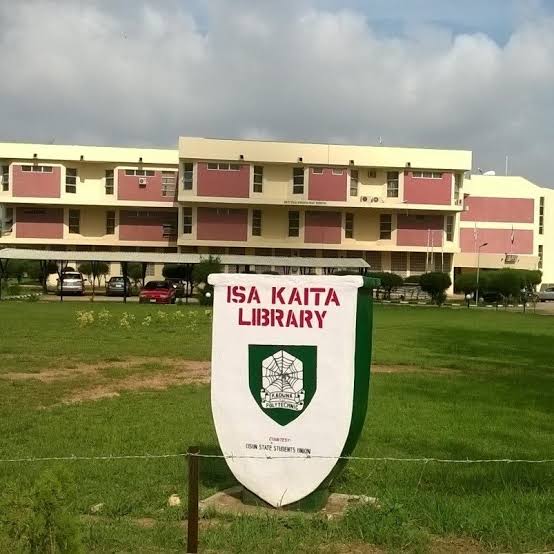
Student of Kaduna Polytechnic about Isa Kaita Library..

By Abbas Sanee
Isa Kaita Library is located at the polytechnic Main Campus, polytechnic Road, Tudun Wada PMB 2021, Kaduna State,11q Nigeria.
During a research, we found that the library is well equipped with reading and research materials needed by the Kaduna Polytechnic students and staff. The library is divided into so many departments/sections, such as Art, Humanity, and Science section.
Here are some of the views of students from the institution.
Daniel Odigi said, “the library is secure and very resourceful to students for academic purpose but there is not enough text books and other materials needed”.
Suleiman Dantsoho, “talking about the library, initially library is a place where students visit for reading and research purpose, Isa Kaita library is partially ok for me, though the environment is very calm but the problem I usually encounter therein is inadequate materials that I need especially for our department mass communication”.
Mohammed Musa replied, “Isa Kaita library is okay for a student’s learning, it’s very a good atmosphere for their learning, I get some text books, journal and even e-library”.
Ruth Sako stated, “Isa Kaita library is well functional but there is lack of reading materials for social science students, I didn’t get the reading materials that I need when I go there”.
Maryam Mohammad “my view on Isa Kaita library, sincerely speaking is that, the library is ok but mass communication students are grappling to fully benefit from the library because there is lack of reading materials for social science students, we only go there with our own materials to read because the building is very convenient.
Salamatu Musa HND 2A class rep, responded, “Isa Kaita library is poorly managed and lacks reading facilities for a student to go in and read, to be honest with you, I think since I entered Kaduna polytechnic, I think I’ve only been in that library once, I have to Carry my own materials because I know that they don’t to have adequate books for me in that library, my view is that is poorly and unkept. I only used mobile technology to browse or get text books outside”.
Aliyu Ibrahim Hadiz MACOSA President, “the library is well functioning for research purpose. Although, recently there was a complaint from mass communication students they cannot lay hands on the necessary materials they need, and they called for a school management to do something about it, I also call on the management to swiftly arrest this problem facing me and my fellow colleagues.

Federal Government’s borrowing Trends in the Last 21 years..

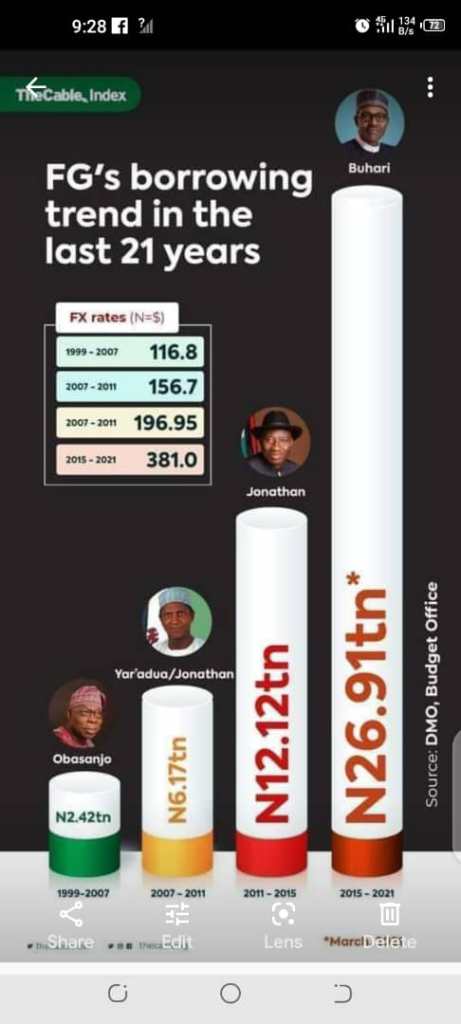
According to the Dept Management Office Nigeria (DMO), statistics have shown a drastic increase in the exchange rate and borrowing trends that occured in different administration of governments from 1999-2021. Such unprecedented situations with several objectives base on their political aims and vision is still rhetorical.

From the year 1999-2007 under the administration of the former president Olusegun Obasanjo, the total amount acumulated in order to facilitate and achieve it’s priority sumed up to 2.42 trillion Naira, with an exchange rate of 116.8 Naira to a dollar. Statistical it rose up to over 20%.

After a change in government, the former president Musa Yar’adua

/Jonathan administration a total amount of 6.17 trillion Naira borrowed, constituting it reasons to aid the supposed budget during their administration from 2007-2011 respectively, while the exchange rate of Naira to dollar increase to 156.7 Naira to a dollar.

Presently, president Muhammad Buhari (GCFR) doubled the amount to 26.91 trillion Naira, leading a drastic decrease in Naira and it’s value at the world’s exchange market resulting to 381.0 Naira par dollar.

Despite the inflationary rise in prices of the goods and services, the government of the former president Good luck Jonathan worked toward tackling such issues, unfortunately the price of dollar to Naira at the exchange rate Market was 196.95 Naira, While on the other hand the sum of 12.12 trillion Naira borrowed to complete the governments’.

Mssn Orientation Mass Communication Department Kadpoly

The Mass Communication unit of Muslim Student Society of Nigeria Kaduna polytechnic hosted its first annual orientation together with public lecture this Tursday at chemical engineering theatre for 2022 session.

Immidiately after the welcoming address by the grand patron Dr Bashir Hadi Ashara, the Head of the department Dr Ahemed Ibrahim Gambo,  while giving a welcoming remark, thank the society’s leadership, and call on the students to coporate and portrait Islam in action by making sure they perform well during their studies. He added that he cannot believe Qur’anic memorizers performing very low in higer institutions.

This year’s orientation centered its theme on Reshaping Morals and Raising Islam Ambassadors in trying to guide the new entry students as the target audience.

On her part, Malama Aisha Gambo Magaji as a guest speaker who presented first paper on Good Morals of the life of Mislim Studdnts in campus, centred much of her discussion on The questionable behavious of muslim female students that need to be adjusted in accordance with the islamic teachings and the institution’s standard.

Advertisementsabout:blankREPORT THIS AD

Also Malam Sanusi Rufa’i Buhari as discussant on the same topic, highlighted some students policies from the students handbook as a guidance throughout their academic jouney in the campus and call on them to compy.

In addition, the second paper 

Design a site like this with WordPress.com
Get started